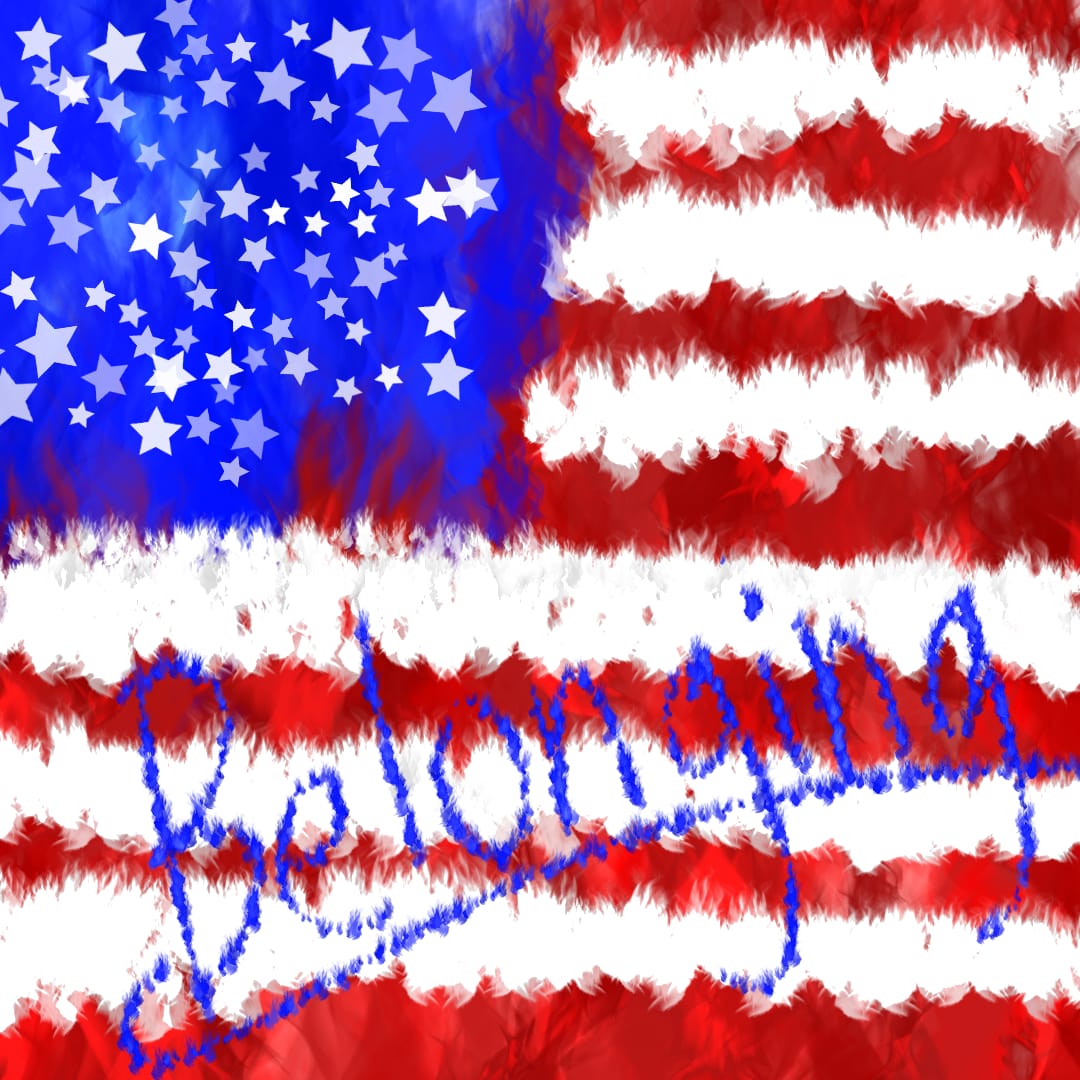
America’s got its problems.
Many.
Too many.
It’s not as if racism, sexism, ageism, and every other -ism under the sun doesn’t exist here going every which way possible.
Just like everywhere else in the world.
Nor is it true that the ideals that America strives for—liberty for all, equal opportunity for all, and civil rights —are ideals celebrated only here.
But— and not only may it be my own experience, it is, all of this is —I’ve observed that everywhere else, it becomes such a spectacle. Acceptance is a spectacle.
Here, it feels normal.
Everywhere else, you see color and ethnicity and age and gender and occupational status and… it’s so distinct. You can point and say “They don’t belong”.
You can’t say there here.
Sure, in some places, you can.
But not my here.
Would you believe it if I told you the only racist, sexist, homophobic, transphobic people I’ve ever met in real life are other South Asians mostly from my hometown, Little India, which is a town in my America? That too via microagression. They didn’t know they were being this way. It’s inherent. It’s simply that no one called them out on it because they all do it unconsciously.
It’s not that no one else does it. It’s simply that because I’ve spent my life there, I recognize it better.
When you grow up with old Indian aunties asking you why you never braid your hair, whether you’ve spent too much time in the sun because you no longer look like the white baby in the photo at the top of the stairs including the ones with burnt skin and pale compact powder on their face, and their husbands asking you why you won’t just become a doctor or engineer or anything STEM and leave writing and the arts a hobby and save your parents the trouble, you learn to recognize the previous generation wanting you to turn into them. Do they know that telling someone to be just like you is just as bad as condeming those who are unlike you?
When you overhear conversations condemning a guy-guy kiss on TV or the brother-in-law of POTUS on Designated Survivor becoming his sister-in-law by the end of the show, you wonder if any of them know that half of their own kids aren’t straight and at least a quarter are trans. Or do they just hide it from each other to save face?
Because that’s the time and place they and all their friends and siblings and classmates and other contemporaries grew up in.
And so did several million people around the globe, each in their own small places.
Now that’s something — Jamaica Kincaid’s A Small Place. You should read it if you haven’t. A postcolonial commentary on the crapped up state the British left Antigua in; a heartbreaking truth that it’s not just the British that are to blame but all the locals who choose to give up fighting for something better.
But I realized what sets America apart from the rest. Unlike in the rest of the world where you can point to a specific group of people and say “This belongs to them”, you can’t do that in America.
Nothing belongs to us. And none of us belong here.
None of us.
This country is a fiction built on the blood of generations worth of natives and non-natives, of people who never knew each other, of people who still only think they know each other, and of people who try their best only to fail again and again.
There is no one language, one religion, one color, one country.
Is this is the one country in which we’re all wrong?
Or is this is the one country in which there is no right or wrong?
It’s easier to feel accepted among those who don’t belong.
It’s easier to ignore hegemony when even those in power don’t belong.

