When did my baby bro become wiser than me?
Usually when he thinks I’m saying dumb things. To his credit I do sometimes say dumb things. Everyone does. Age is the least relevant factor in determining wisdom in my opinion.
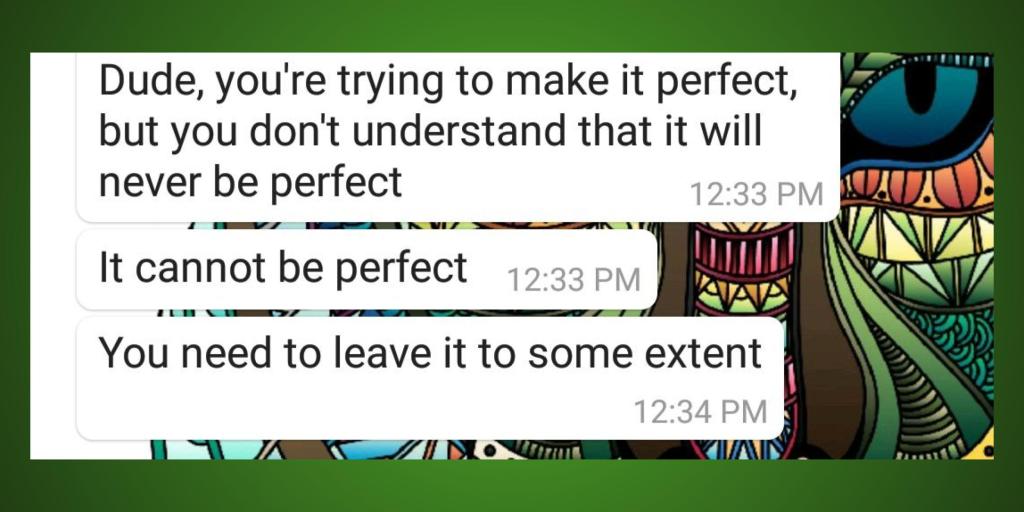
So, the dumb thing he thought I said the other day was that I wanted a perfect ending. I did not say this. There are no perfect endings; I know this. But with the amount of complaining I was doing about not being satisfied with the endings I was trying and about having writer’s block, I don’t blame him for thinking so.
Then one day, some time last week, I got a string of texts from him:
I was telling my aunt about this this morning on the phone, and after laughing, she said, “yes, an ending cannot be perfect, but it does have to make sense”. She gave me (what I am officially deeming) the Biryani-Sambar Theory of How to End a Story:
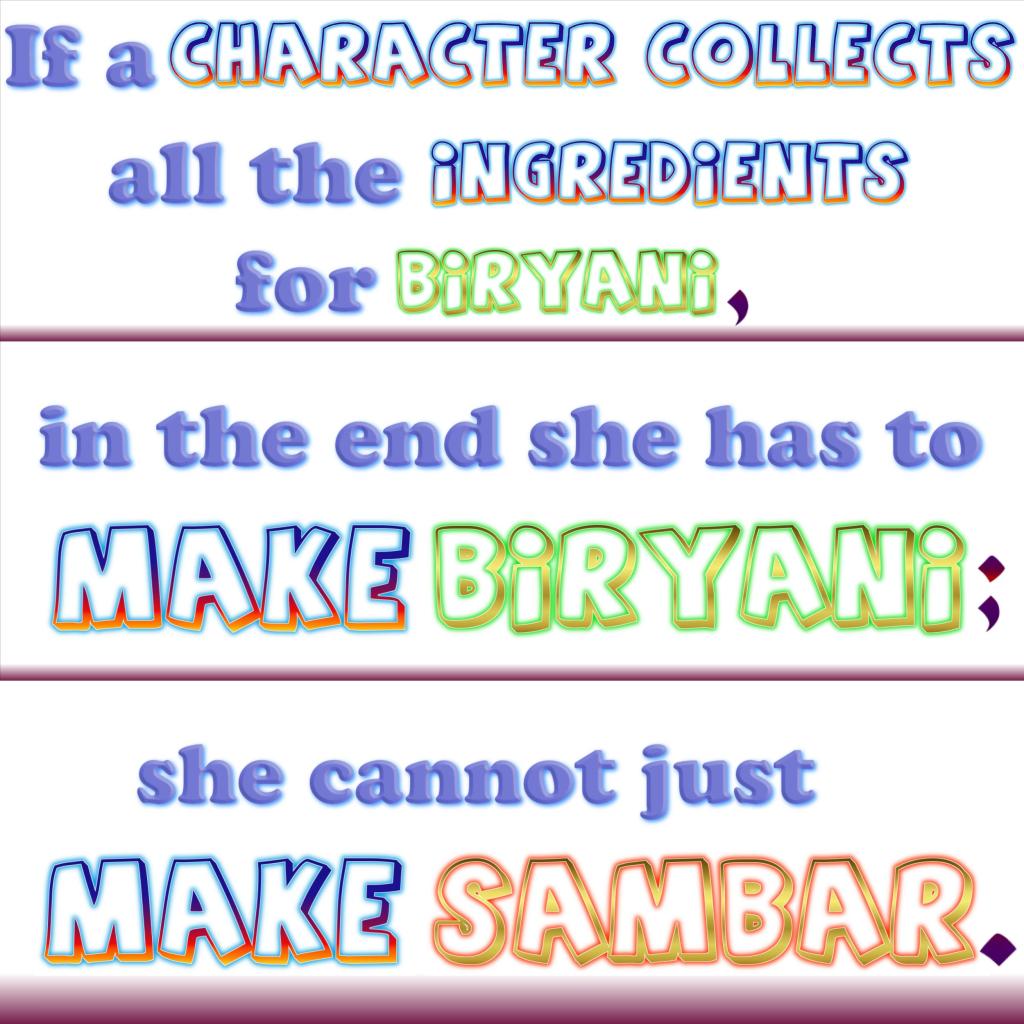
Though strange, her analogy seemed apt to my issue. You could apply this theory to a character, or the writer; it works either way.
It reminds me of a lesson from my Fiction Writing class this semester. We discussed how even if an ending is the most surprising ending, after reading it, we should be able to back, find the clues, and wonder how we missed it. But there is no single ending that accomplishes this.
So at the end of the day, the writer (or creator of the story as not every story is written) must choose. They need to delve into the depths of the story and daydream, or maybe they need to take a coffee break and meditate. But the ending will come to them.
And it doesn’t have to be perfect. It doesn’t even have to be an ending. It’s only a matter of: At what point do we stop telling this story?
I need to stop thinking about making it so perfect, and more about letting it be the best that it possibly can. I do need a coffee break… or rather a mocha latte break. Thank you for the suggestion A.

